Showing posts with label panasonic G3. Show all posts

Monday, 22 April 2013

Crabwood Clearings

Logpile © Graham Dew 2013
Logpile

There are virtually no unmanaged spaces in this country today, and this is just as true for nature reserves as it is for farmland and commercial forests. I've often mentioned Crabwood in posts, a small area of woodland that serves as a nature reserve a couple of miles west of Winchester. I've been visiting this area for the best part of three decades now, and in that time I've seen many clearings. Large trees are felled, coppices trimmed and new growth either in the form of plants or saplings take their place as the canopy of trees is removed or grows back.

Quatrefoil Stump © Graham Dew 2013
Quatrefoil Stump

It is hard to see the steady growth of the woodland; the rides are cleared on eight or sixteen year cycles and so one becomes accustomed to the layout of the trees. When an area is cleared it is very noticeable and sudden, and to my eyes, a very interesting place to explore. One particular ride has been extensively cleared of its small trees this winter. There has been a lot of activity by the foresters in recent weeks, and now, as spring starts, it is the turn of nature as new flowers and sapling start to shoot upwards. Soon the logs, stakes and trimmings will be removed and nature will be left to its own devices once again. As it does so, there will be plenty to reward the visitor who spends time to look.


Caught in the Trimmings © Graham Dew 2013
Caught in the Trimmings


Virtually all of these pictures were taken on the G3 with the 20mm lens. My camera bag is becoming lighter these days. I usually only carry the 20mm and 45mm lenses and try make sure I'm not carrying anything that won't be used. If it is sunny I will carry a small reflector. If the light is not so good I will take flash and diffusers in a separate large bag, but in general I’m happier when I carry less equipment.


Coppicing © Graham Dew 2013
Coppicing


Monday, 7 January 2013

Quiet Morning in Crabwood

With the house now devoid of the Christmas decorations and the skies filled with endless grey, it’s all feeling quite wintry and ‘January’ this weekend. I decided to head off to Crabwood, a small nature reserve and managed woodland near Winchester yesterday morning. A heavy mist hung around the woods muffling sound and softening the light; it felt as though the countryside was asleep.

Quiet Morning in Crabwood 1, January 2013 © Graham Dew

Quiet Morning in Crabwood 1

There is always something to look at if you have the time and the right frame of mind, and it was not long before I found a few subjects that would act as suitable motifs to capture the experience of being out among the trees. I had taken along my new flashgun plus brolly & lighting stand to add some light to energise the pictures. The biggest problem on flat dull days is one of poor lighting on key subjects. Just a small touch of light from a flash is needed to draw attention to the subject, to lift it from its surroundings. It took the brolly along so that I could give my subjects diffuse soft lighting.

Quiet Morning in Crabwood 2, January 2013 © Graham Dew

Quiet Morning in Crabwood 2
I was using my new Metz 52 AF-1 flashgun that I’ve just got to supplement the Lumix G3. The primary reason for getting this model was the high speed synchronisation feature, which allows me to use shutter speeds in excess of the normal X-sync of the camera. In this way I can use large lens apertures to give me the shallow depth of field that I want for pictorial reasons and still be able to add light to the pictures. On most camera systems you need both camera and flashgun to have this synchronisation (also known as Focal Plane or FP mode). Fortunately all micro four thirds cameras are equipped for this, but you still need to get a fairly high end flash unit to offer this functionality. I’ll write more about the Metz over the coming weeks, but for now I’m pleased that the new unit is opening up creative opportunities in the way that I hoped it would.

Monday, 17 December 2012

Focussing on Details


Along the Oxdrove, #1 © Graham Dew 2012
Along the Oxdrove, #1
We are being treated to some fine, bright and mild weather at the moment. This Sunday just past dawned bright and fine, so I took off towards the Oxdrove near Northington to the east of Winchester to take some pictures. In visual terms is not a particularly interesting place to visit; long vistas of gentling rolling countryside, and fairly nondescript paths, but it is relatively high and bright, and I felt in need of a good dose of sunshine.

Along the Oxdrove, #2 © Graham Dew 2012
Along the Oxdrove, #2

The most appealing features on the walk were the bleached leafless branches of some of the younger saplings. Once again I concentrated on using the 20mm prime for my G3, separating various planes of interest in the images by using the shallow focus possible from this lens. I scarcely need to say that it is always important to pay attention to the background on any picture, and it was my intention with these pictures to have softly drawn stems that echoed crisply focussed elements in the foreground. 

I was reminded how far modern cameras have developed of the past few years. It is so much easier, more interactive, using digital cameras for this type of work. Even with depth of field preview levers, it was largely a game of luck trying to work on shallow focus images using film cameras. I’m now wondering how I might extend narrow depth of field working to the creation of joiners.

Along the Oxdrove, #3 © Graham Dew 2012
Along the Oxdrove, #3
I had always found it difficult to control the focussing on small details when using the 20mm Lumix lens, finding that the camera would usually focus on the background when my intention was the thin near-field detail, such as branches and leaves. In the past month I’ve given a couple of lectures, and in one discussion during the interval a member of the audience told me of how useful he had found the pin-point focus mode on his G3. This has proven to be a very useful tip, and I now find that by using this mode I can now quickly get the focus I wish when using this lens. On Sunday I was using it all the time.  

Along the Oxdrove, #4 © Graham Dew 2012
Along the Oxdrove, #4
Focussing was one of the main issues for me when I decided to move away from a DSLR to a mirrorless system camera. DSLRs, with their separate AF sensor are always prone to alignment tolerances, and there were many times when I could not focus accurate at close distances with my previous camera. Apparently this is still a problem even on some very expensive new full-frame cameras. Because the autofocus works directly from the image sensor on mirrorless cameras, the focus is always correct. Added to that, the whole process of touching anywhere on the monitor to set the focus is so intuitive and so quick on the G3. The focus modes, such as pin-point, subject tracking and face recognition are not gimmicks, but useful practical tools that work to help you get the picture much more reliably than was possible just a few years ago. Some progress is real progress.

Wednesday, 12 December 2012

Prime Numbers


In my camera bag, 20 and 45 are prime numbers. Or to be more precise, I have two fixed focal length prime lenses of 20mm and 45mm. These are my prime lenses in terms of use and choice too; I use these two lenses in preference to the standard zoom that came with the camera. I also know that any new lens I might buy in the future will not get the same level of use as these two lenses, which helps me resist doing further damage to the bank account.

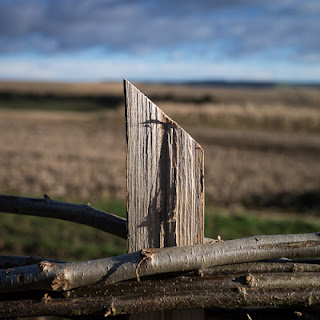
New hedge near Corhampton, #1 © Graham Dew 2012
New hedge near Corhampton, #1

The two lenses I’m talking about are the Panasonic Lumix 20mm/f1.7 standard lens and the Olympus 45mm/f1.8 short telephoto. When I bought my Lumix G3, one of the big attractions of the m43 system was the availability of these highly praised lenses. You can find plenty of reviews on the web about how excellent these lenses are and they are all true. Both are very sharp, very bright and very light, and fortunately, reasonably priced. And they both share the same trump card; they are both excellent when used at full aperture.  It is this quality, which allows one to create sharply drawn detail against a softly rendered background that makes these lenses so appealing.

New hedge near Corhampton, #2 © Graham Dew 2012
The 20 was the first lens that I got. A pancake lens, much wider than it is long, it gives the camera a very low profile which just about allows one the opportunity to put the camera into a pouch. It weighs next to nothing, and allows you to tuck the camera under your arm discretely. Optically it is very clear and sharp, no visible distortion. The great appeal of this lens is that it can truly be used wide open, with pleasing depth of field drop depending on the closeness of the subject. If you need more depth of field, commonly when focussing on nearby object, you can always dial in more depth by setting the aperture smaller. Optically, the lens is very good indeed. The tonality, sharpness, and transition from sharp to blurred is as good as you could wish for. The only thing I would really like to improve is the focussing. Many of my pictures are of objects close-up. If the object is small or thin, then the AF has trouble focussing. The lens will hunt from near to far, often passing through the chosen point of focus. As the focus is quite slow (slower than the kit zoom) this can take some time. When this happens I switch to using the pin-point mode of the G3, which usually helps to find the focus. Overall, it’s a great lens and one I grow to enjoy more and more. It is now my normal lens, the one lens I'll take if I'm limiting myself to the minimum gear.

New hedge near Corhampton, #3© Graham Dew 2012
New hedge near Corhampton, #3
The 45mm is the same but different. Again, it has very high image quality, can be used wide open too and is also very small and light. But the depth of field effects are even stronger as one would expect from a longer focal length. This Olympus lens is much faster at focussing than the Panasonic lens and always seems to lock onto the desired object quickly snapping into focus. Its shape is different too. The barrel of the lens is smaller than any other lens I have owned, even smaller than the lens mount. It just feels tiny in the hand and on the camera. Like the Lumix the barrel construction is plastic, but silver finished as opposed to the gunmetal colour of the Lumix.
New hedge near Corhampton, #4 © Graham Dew 2012
New hedge near Corhampton, #4
The only control on either of the lenses is the manual focus ring; something I rarely use. For hand held close up work you really want to take the picture as soon as the focus is achieved, and this is best done with AF. Neither of the lenses have image stabilisation. When used at large apertures the shutter speed stays high in a wide range of uses so this is not often an issue, especially coupled with the clean images I get from the G3 at high ISOs.

New hedge near Corhampton, #5 © Graham Dew 2012
New hedge near Corhampton, #5
As I mentioned in the first ever post on Joined Up Pictures, I’m really interested in depiction and the way we perceive things, how we turn three-dimensional space into a flat 2D image. When there is a lot to be seen, joiners have a special appeal, allowing an image to be built from multiple viewpoints and memories. But there are times when one looks with a focused gaze on a single object, usually something in the near-field, and these lenses do a good job in replicating that experience. When making near-field pictures control of the background is every bit as important as the main subject. Position, lighting and colour are all important aspects of making such an image, but the ability to soften the background through out-of-focus blur is probably one of the most effective ways to de-emphasise the surroundings.

Joiners might be considered to be a quite radical manipulation of images, but other than making joiners and performing tonal adjustments, I really don’t like modifying images in software. I prefer to make the image in-camera, using the lens and shutter for control of blur. The camera lens behaves like our eye, so focus and blurring only have believable three-dimensionality when done in camera. In fact, the Lumix 20mm has a focal length and field of view that almost exactly matches the human eye, perhaps making it the most natural of any lens available today.

New hedge near Corhampton, #6 © Graham Dew 2012
New hedge near Corhampton, #6
I’m really pleased with both of these lenses and recommend them to anyone using m43 camera. The 20 is a very nice lens for photographing things, the 45 for people. The other day I came across a brochure from the late 80s for the Leica M6, a camera that I would have loved to own at the time. At the back of the brochure it suggested a few kits of bodies and lenses for a number of purposes. The small kit recommended for travel and street shooting was an M6 body with a 35mm & a 90mm lens. A quarter of a century later I still can’t afford a Leica, but have arrived at their recommendation of focal lengths.

Sunday, 18 November 2012

End of Autumn

Autumn Colour 1, November 2012 © Graham Dew

Autumn Colour 1, November 2012

Day break this morning was greeted by clear skies and a fair frost. Only a few trees now have their leaves, so I made an effort to get out and photograph the last remaining foliage before it is all gone. Usually the trees are bare by the end of November and then the land is bald and beached until early March.  

Autumn Colour 2, November 2012 © Graham Dew

Autumn Colour 2, November 2012

I guess I should have tried to make a joiner of two but I have not been feeling too well recently so it was just a question of trying a few ideas out and concentrating on some near-field pictures. So sticking to familiar techniques and compositions, taken in relatively new locations (for me) around town.

Autumn Colour 3, November 2012 © Graham Dew

Autumn Colour 3, November 2012

Quite a few of the pictures were taken on the Olympus 45/1.8lens, which is a real joy to use with my G3. I bought this lens to use wide open which is what I do most of the time, the only exceptions being when the light is very bright and I need to get the shutter below 1/4000, or when I know I’m going to need a bit more depth when used close up.

Autumn Colour 4, November 2012 © Graham Dew

Autumn Colour 4, November 2012